
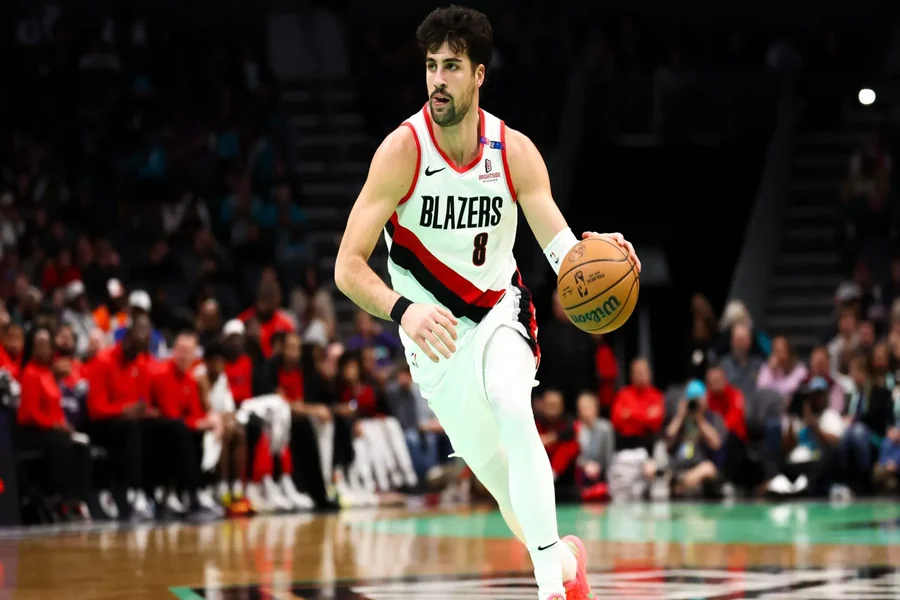
The National Basketball Association operates in two parallel arenas. One sits under arena lights where players compete at full speed for wins and contracts. The other unfolds in quieter corridors outside locker rooms, where athletes walk through the pregame tunnel wearing carefully chosen outfits that reach millions through social media within minutes. This tunnel moment has turned into a cultural ritual. Cameras capture every arrival, fashion accounts repost the best looks, and fans debate style choices with the same energy they once reserved for box scores.
This shift did not happen overnight. The NBA once enforced a strict dress code that required suits and conservative attire during league events. That rule appeared in the mid-2000s as an attempt to shape the league’s public image. Players gradually turned those rules into creative opportunities. Tailoring became sharper, sneakers more experimental, and accessories more intentional. By the 2010s, the tunnel walk had become a form of storytelling.
Athletes such as Russell Westbrook pushed fashion boundaries with bold shapes and daring color combinations. Others took a refined path. LeBron James blended classic suits with subtle luxury details that signaled confidence without spectacle. Younger players adopted a hybrid approach that mixed streetwear and high fashion. Shai Gilgeous-Alexander now appears regularly in fashion magazines and runway shows, demonstrating how the NBA has become a gateway into global style culture.
The modern superstar therefore operates in two markets at once. He must perform on the court while shaping a recognizable identity off it. Statistics build credibility, but personality creates longevity. Brands look for athletes who communicate something distinctive. Fans respond to players who reveal interests beyond basketball.
This environment raises an intriguing question. Could an emerging forward from Israel step into both roles at once? The career of Deni Avdija offers a case study. His on-court progress has been steady rather than explosive, yet his background, composure, and growing confidence suggest that his influence may extend beyond the hardwood.
Understanding whether that possibility exists requires examining the stages of his journey. Each stage reveals something about how players evolve into cultural figures.
A Basketball Childhood in Tel Aviv
Deni Avdija grew up surrounded by basketball long before professional scouts noticed his talent. His father, Zufer Avdija, played professional basketball in Europe. Games and practices formed part of the family routine. That environment exposed the young player to the discipline required at high levels of competition.
Israel’s basketball system differs from the American youth circuit. Clubs rather than schools serve as the primary training centers. Talented players join professional organizations at early ages and train within structured academies. Avdija entered the youth program of Maccabi Tel Aviv, one of Europe’s most respected basketball institutions. Coaches there emphasize fundamentals and tactical awareness. Players learn to read the floor and adapt to multiple positions.
Those lessons shaped Avdija’s style. He developed strong passing instincts and a willingness to defend larger opponents. Instead of specializing early as a scorer, he built a balanced skill set. Coaches often describe such players as connectors because they link offensive actions together.
International tournaments provided the first evidence of his potential. Avdija represented Israel in youth competitions organized by FIBA. His performance at the 2019 FIBA U20 European Championship gained particular attention. He averaged strong scoring and rebounding numbers while guiding Israel to the tournament title. Analysts praised his vision and composure in decisive moments. The tournament named him Most Valuable Player, a rare honor for a player from a small basketball market.
European competition also exposed him to physical play. Opponents often included experienced professionals rather than teenagers. That environment accelerated his development. When he eventually declared for the NBA Draft, scouts already knew he could compete against older players.
His final season with Maccabi Tel Aviv confirmed that readiness. Although he did not dominate scoring charts, he contributed across categories. Coaches trusted him in defensive assignments and transition offense. Those responsibilities built a reputation for reliability, an attribute NBA teams value when evaluating international prospects.
The 2020 Draft and a New Environment
The 2020 NBA Draft took place under unusual circumstances. The COVID-19 pandemic forced teams to conduct remote scouting and interviews. Players watched the event from their homes rather than crowded arenas. Avdija followed the broadcast from Israel while his family waited nearby.
When the Washington Wizards selected him with the ninth pick, analysts described the choice as both strategic and patient. Washington needed size on the wing and versatility on defense. Avdija offered both attributes, though his offensive ceiling remained uncertain.
Transitioning from European basketball to the NBA requires several adjustments. The schedule becomes denser, the court spacing wider, and the athleticism sharper. American rookies already face those challenges. International players must adapt to them while learning a new language and culture.
Avdija approached the process methodically. Coaches asked him to focus first on defense and rebounding. Those tasks allowed him to contribute immediately without forcing offensive production. He guarded multiple positions and moved the ball quickly when receiving passes.
His rookie statistics reflected that role. The numbers looked modest compared with players drafted for scoring. Yet analysts noticed the details that do not appear clearly in box scores. He rotated quickly on defense and moved well without the ball. Those habits suggested that his development could follow a gradual path rather than an explosive one.
Gradual growth often produces resilient careers. Several NBA stars began their journeys in similar ways.
Learning the League One Season at a Time
The NBA rarely rewards impatience. Players who arrive from different systems must adjust their instincts to the league’s rhythm. Avdija’s early seasons demonstrated that adjustment in progress.
Coaches continued to assign him defensive tasks. He guarded quick guards during one possession and physical forwards in the next. That versatility made him valuable even when his scoring fluctuated. Teammates trusted him to make correct decisions in transition.
Improvement came in stages. Shooting mechanics became smoother as he practiced catch-and-shoot opportunities from the corners. Ball handling improved under pressure. Coaches also encouraged him to attack the basket when defenders closed out too aggressively.
Observers began comparing his development to players who required time before reaching stardom. Jimmy Butler entered the league as a defensive specialist before evolving into an elite scorer. Pascal Siakam also began as an energetic role player before expanding his offensive game.
Such examples highlight a pattern within professional basketball. Players who master defensive responsibilities early often gain trust from coaching staffs. That trust grants them opportunities to experiment offensively without fear of losing minutes.
Avdija followed that pattern. As his confidence increased, he began initiating fast breaks after rebounds. He occasionally handled playmaking duties when primary guards rested. Each new responsibility revealed additional dimensions of his game.
Progress rarely appears linear. Injuries interrupted portions of his early career, forcing temporary pauses in momentum. Yet those setbacks also taught patience. Rehabilitation periods allowed him to refine shooting technique and strengthen his body.
By the middle of his NBA tenure, analysts began describing him as a two-way forward. That label carries weight in modern basketball strategy. Teams value players who contribute on both ends of the floor because they allow lineups to adapt to different matchups.
National Identity and Global Attention
Professional athletes often become symbols for their home countries. Basketball illustrates this dynamic clearly. When a player succeeds in the NBA, fans across his homeland follow every game with pride.
Israel had previously celebrated the achievements of Omri Casspi, the first Israeli player to appear in the NBA. Casspi’s career opened doors for younger talents by proving that Israeli players could compete at the sport’s highest level.
Avdija entered the league carrying the expectations of that legacy. Israeli media covered his rookie season intensely. Young players in local academies watched his games as evidence that international dreams could become reality.
National representation often increases an athlete’s visibility beyond traditional sports audiences. Fans who rarely follow the NBA may still follow the career of a compatriot competing abroad. Television ratings and social media discussions reflect that interest.
The phenomenon appears across the league. Giannis Antetokounmpo became a national icon in Greece after winning championships and Most Valuable Player awards. Luka Dončić commands immense attention in Slovenia and across Europe for similar reasons.
Such attention influences marketing opportunities. Brands often look for athletes who connect with audiences in multiple regions. An international player who succeeds in the NBA therefore represents both an individual talent and a cultural bridge.
Avdija’s background places him within that category. His career attracts viewers in Israel, Europe, and the United States. That combination creates conditions for broader influence if his on-court impact continues to expand.
The Fashion Culture of Basketball
Basketball and fashion share surprising similarities. Both rely on movement, rhythm, and personal expression. The NBA discovered this connection as players began using clothing to communicate identity.
Early NBA stars rarely considered fashion a central element of their public image. Uniforms dominated attention. Off-court clothing remained simple. That pattern changed gradually as athletes gained control over personal branding.
The arrival of social media accelerated the transformation. Platforms such as Instagram and TikTok allowed players to present curated images directly to fans. Outfits worn during travel or pregame arrivals reached audiences far beyond arena seats.
Some athletes embraced dramatic experimentation. Kyle Kuzma frequently appears in oversized sweaters and avant-garde jackets that spark discussion online. James Harden collaborates with luxury designers and attends fashion events worldwide.
Other players adopt quieter styles. Stephen Curry prefers tailored clothing and understated colors that reflect a polished aesthetic. That approach appeals to brands seeking stability rather than spectacle.
The diversity of styles reflects the league’s international nature. Players arrive from different cultural backgrounds and bring distinct design influences. European athletes often favor refined tailoring. American players may blend streetwear with traditional suits.
Fashion houses noticed the trend quickly. Designers invite NBA players to attend runway shows during fashion weeks in Paris or Milan. Athletes appear in editorial photo shoots and advertising campaigns. The connection between basketball and fashion now forms part of modern sports culture.
Understanding this connection clarifies why analysts sometimes discuss style when evaluating emerging players. A recognizable fashion identity can amplify an athlete’s global presence.
Deni Avdija’s Emerging Personal Style
Deni Avdija has not pursued dramatic fashion statements so far. His public appearances suggest a different approach. He often favors clean silhouettes, neutral tones, and understated accessories. Jackets fit sharply without excessive embellishment. Sneakers complement rather than dominate an outfit.
Observers sometimes describe this approach as minimalist. The term indicates restraint rather than simplicity. Each piece appears chosen carefully to maintain balance. That style aligns with broader European design traditions that emphasize proportion and craftsmanship.
Such restraint can work effectively for athletes who prefer quiet confidence over theatrical flair. Several established players built fashion reputations through similar methods. Chris Paul frequently appears in classic suits with subtle details. The clothing communicates maturity and control rather than experimentation.
European upbringing may also shape Avdija’s perspective on clothing. Cities such as Milan and Paris influence global fashion through design schools and luxury houses. Even athletes who do not work directly with designers absorb these influences through travel and media.
Fashion identity evolves gradually. Players often begin experimenting after gaining stability within their teams. As Avdija’s role grows, he may explore collaborations with stylists or brands interested in his international profile.
Public appearances at charity events and league gatherings already hint at this potential. Photographs show carefully coordinated outfits that balance athletic build with tailored structure. The result appears deliberate rather than spontaneous.
Occasionally a humorous moment appears in media coverage. During one interview, a reporter commented on seating arrangements in a training facility lounge filled with modern cafe chairs, prompting Avdija to joke about how athletes spend as much time discussing design as they do discussing plays.
That brief moment captured the intersection of sports culture and everyday design. It also illustrated how naturally lifestyle conversations enter the world of professional athletes.
Performance Remains the Foundation
Fashion visibility cannot substitute for basketball production. Fans ultimately judge players through results on the court. Avdija’s path toward broader recognition therefore depends primarily on performance.
Modern NBA offenses require versatile forwards who can defend multiple positions while contributing offensively. Avdija already demonstrates many elements of that archetype. He rebounds aggressively and initiates fast breaks with accurate outlet passes. His defensive awareness disrupts opposing plays.
Offensive growth remains the key variable. Scoring averages and shooting percentages often determine whether a player moves from role player to star status. Coaches encourage him to attack mismatches and develop mid-range consistency.
Improvement in these areas would elevate his statistical profile. Increased scoring would attract media attention and All-Star consideration. Those milestones often trigger greater marketing opportunities.
The league offers several examples of players whose popularity grew alongside improved production. Paul George evolved from defensive specialist to elite scorer and brand ambassador. Kawhi Leonard built a reputation for quiet excellence that eventually translated into global endorsements.
Avdija’s future could follow a similar arc if his offensive contributions continue rising. His defensive foundation already provides stability. Expanding scoring ability would transform him into a complete two-way player.
The Intersection of Sports and Culture
Sports historians often describe basketball as a cultural barometer. The league reflects broader social currents in music, design, and technology. Players influence those currents through visibility and personality.
Avdija’s career sits within that intersection. His Israeli heritage introduces a distinct narrative into American sports media. His European development contrasts with traditional American college pathways. Those differences make his story compelling even before considering fashion.
Cultural influence rarely appears suddenly. It emerges through repeated exposure. Fans observe how athletes conduct interviews, interact with communities, and present themselves publicly. Authentic behavior builds credibility.
If Avdija continues demonstrating professionalism and curiosity beyond basketball, he may attract attention from industries that operate alongside sports. Fashion represents only one possibility. Media appearances, philanthropic work, and international outreach also contribute to an athlete’s broader identity.
The NBA encourages such engagement. League initiatives frequently involve players in social campaigns and global events. Participation in these programs expands visibility while strengthening community connections.
For an international player, those opportunities carry additional significance. They allow athletes to represent both their teams and their countries in meaningful ways.
A Career Still Unfolding
Predicting the trajectory of a professional athlete remains difficult. Injuries, team changes, and competitive dynamics all influence outcomes. Avdija’s career has progressed steadily rather than dramatically, yet steady progress often forms the foundation of lasting success.
Observers now evaluate his development through several lenses. Analysts examine defensive metrics and offensive efficiency. Fans watch highlights that reveal flashes of creativity. Marketing experts consider how his personality might translate into brand partnerships.
Each perspective contributes to the larger narrative. The question is not merely whether he will become a star scorer. The question involves whether he can combine performance, identity, and cultural presence into a recognizable public profile.
Basketball history suggests that such combinations appear rarely. Players who succeed in both arenas often possess a mixture of discipline and curiosity. They treat sports as a craft while exploring interests beyond competition.
Avdija’s journey remains in progress. His early years in Tel Aviv shaped a balanced playing style. His transition to the NBA introduced new challenges that he continues to navigate. The global audience watching his games adds another dimension.
Whether he ultimately becomes one of the league’s most influential figures will depend on choices made over many seasons. For now, his career illustrates how modern athletes move through overlapping worlds where sports performance and cultural identity evolve together.
