
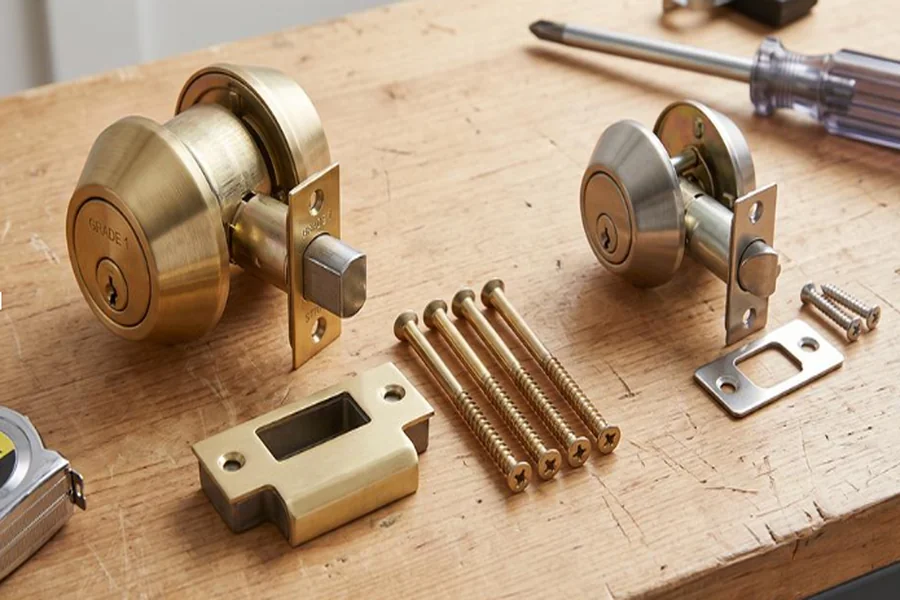
Two deadbolts can sit side by side on a hardware shelf, wear the same satin nickel finish, and cost within a few dollars of each other, yet differ enormously in how long they resist an actual attempt to force them. One might hold up to sustained kicking; the other can fail in seconds. Most homeowners buy on finish and price because nobody ever explains the grading system stamped on the back of the package. Understanding it takes about two minutes, and it changes what you are willing to put on your front door.
What the Grades Actually Mean
Residential locks in the United States are rated Grade 1, Grade 2, or Grade 3 by ANSI and BHMA, the organizations that set the testing standards. The grade is not marketing language. It reflects how the lock performed in laboratory tests measuring how many open-and-close cycles it survives, how much force it withstands, and how it holds up to strike attempts.
Grade 3 is the entry level. It meets a minimum residential standard and little more, and it is the hardware that arrives on the majority of new-build and rental properties because it is inexpensive to install in volume. Grade 2 is a genuine step up, tested to higher force and cycle thresholds, and it is appropriate for most family homes. Grade 1 is commercial-level strength, the specification used on business entrances, tested for far more cycles and far greater resistance to force.
The practical takeaway is that moving from Grade 3 to Grade 2 or Grade 1 on exterior doors is one of the cheapest meaningful security improvements available to a homeowner. It requires no construction, no wiring, and no subscription. A qualified Palm Coast locksmith can assess every exterior door and upgrade the whole house in a single visit, usually keeping all the locks on one key for convenience.
The Strike Plate Matters as Much as the Lock
Here is the detail that undoes most of the money people spend on hardware: a Grade 1 deadbolt anchored by a flimsy strike plate is still a weak door. When a door is forced, the failure point is almost never the bolt itself. It is the wooden jamb around it. The short screws supplied with most locks bite only into that thin trim, which splits easily under a solid impact.
The fix is inexpensive and fast. A reinforced strike plate secured with three-inch screws driven through the jamb and into the wall stud behind it transfers force into the structural framing of the house rather than into a strip of soft trim. That single change often does more for the security of an entrance than the lock upgrade itself, and it is skipped on the overwhelming majority of homes.
While the strike plate is being addressed, it is worth checking the door’s fit. A bolt that only partially enters the strike, or a door that must be pulled or lifted to lock, is not delivering the protection the hardware was designed to provide. Proper alignment is part of the job, not an optional extra.
Coastal Conditions Change the Calculation
In coastal Florida there is a second consideration that homeowners further inland never have to think about: salt air. Hardware that is not properly finished corrodes from the inside out, and corrosion is invisible until the mechanism begins to bind. A lock that has become stiff is not simply annoying; it is reporting internal deterioration, and a corroded lock eventually fails, almost always at the least convenient moment.
Solid brass and quality stainless components hold up far better in this environment than plated pot metal, and the difference becomes obvious after a year or two near the water. Choosing hardware rated for coastal exposure means the security you paid for is still functioning several seasons later. The specialists at Lockey Locksmith select and install hardware suited to this climate rather than whatever happens to match the finish.
A Simple Standard for the Whole Home
Security gaps tend to appear at the doors nobody thinks about: the side entry, the door from the garage into the house, the back slider. A high-grade deadbolt on the front door means very little if a rear entrance still carries builder-grade hardware from a decade ago. Bringing every exterior door up to one consistent standard removes the weak link that anyone testing a house would look for first.
Grade, strike plate, and material are the three factors that decide whether a deadbolt is genuine protection or expensive decoration. Get all three right on every exterior door, and the front of your home stops being the easy option on the street.
