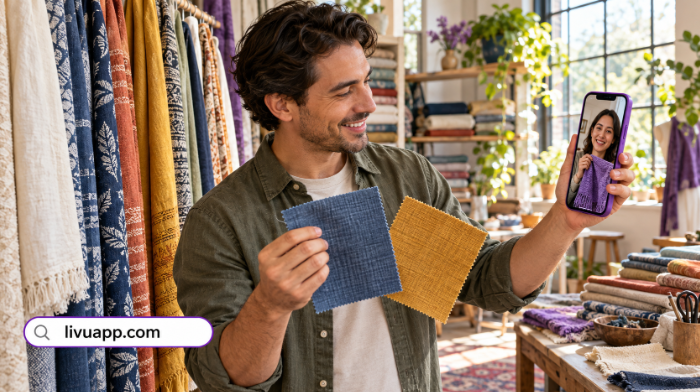

Color is one of the quickest ways to make a conversation visual. A purple scarf, an indigo fabric, or a bright pair of shoes can lead to stories about memory, culture, climate, and personal taste.
During a live u video chat, discussing colors and materials can create an engaging exchange without relying on questions about someone’s body or physical attractiveness. The focus remains on choices, meanings, and experiences.
A 1vs1 livu conversation can make this topic especially interactive. Both participants can show a nearby object, compare shades, or explain why a particular fabric feels connected to a season, celebration, or place.
Start With a Color, Not a Compliment
Appearance-based compliments can feel too personal when two people have just met. A neutral observation about color is usually easier to receive.
For example:
- “That shade of blue looks interesting. Do you wear it often?”
- “I noticed the purple detail behind you. Is that one of your favorite colors?”
- “Your room has very warm colors. Did you choose them?”
- “Do you prefer bright colors or quieter ones?”
These questions invite explanation rather than demanding a reaction to praise. They also allow the other person to redirect the conversation toward clothing, interiors, art, or nature.
Ask How a Favorite Color Was Chosen
A favorite color may be connected to more than visual preference. It might remind someone of the sea, a childhood room, a sports team, a family member, or a particular period in life.
Useful follow-up questions include:
- “Have you always liked that color?”
- “Does it remind you of a place?”
- “Do you enjoy wearing it or only seeing it?”
- “Is there a color you recently started appreciating?”
- “Do you associate it with a particular mood?”
The answers can reveal how tastes change without suggesting that a color has one universal meaning.
Compare Color Meanings Across Cultures
Colors can carry different associations depending on culture, religion, family tradition, and context. A shade linked with celebration in one place may be associated with formality or mourning somewhere else.
Approach these differences with open questions. Ask, “When do people usually wear this color where you live?” rather than stating that everyone in a country interprets it the same way.
People within the same culture may also have different relationships with a color. Personal experience should take priority over general rules.
Use Fabric to Add Texture to the Discussion
Color is only one part of how an item feels. Linen, wool, cotton, silk, denim, and handmade textiles each have different textures and practical uses.
If a piece of fabric is nearby, show how it moves or catches the light. Then ask:
- “Which fabrics feel most comfortable in your climate?”
- “Do you prefer smooth or textured materials?”
- “Is there a traditional fabric made in your region?”
- “Do certain materials remind you of a season?”
- “Would you choose comfort, durability, or appearance first?”
These questions connect personal style with daily life rather than reducing it to fashion trends.
Explore How Climate Shapes Clothing
The same color or material can serve different purposes in different environments. Loose, breathable fabrics may be essential in humid weather, while layered wool and insulated materials matter in colder regions.
Ask how people adapt clothing to heat, rain, wind, or changing seasons. This can lead to discussions about local design, commuting, outdoor activities, and practical creativity.
Avoid treating climate-based clothing as a costume. What looks unfamiliar to one person may be ordinary and functional to another.
Talk About Patterns and Their Stories
Patterns can reveal craftsmanship and history. Stripes, checks, geometric shapes, floral designs, and woven motifs appear around the world, but their techniques and meanings vary.
A person might share a patterned scarf, cushion, bag, or tablecloth. Ask whether it was handmade, purchased locally, received as a gift, or chosen simply because it looked appealing.
Do not assume that every pattern has deep symbolic meaning. Sometimes a design is selected for beauty or practicality, and that answer is equally worth hearing.
Compare Everyday and Special-Occasion Choices
Many people use color differently depending on the setting. Their everyday wardrobe may be neutral, while celebrations bring brighter shades and detailed fabrics.
Questions about occasions can open a wider cultural conversation:
- “Are there colors people prefer for weddings?”
- “Do festivals have recognizable clothing traditions?”
- “Is there something you wear only on special days?”
- “Do work or school rules affect what people choose?”
- “Which occasion allows the most creativity?”
Keep the focus on the person’s experience instead of expecting them to represent an entire community.
Avoid Price and Brand Comparisons
A meaningful discussion about style does not require luxury labels. Asking how much something costs or whether it is an expensive brand can create unnecessary pressure.
Instead, ask why the person chose the item, how long they have owned it, or what makes it useful. A secondhand jacket, handmade scarf, or simple shirt may hold a better story than a costly product.
Style often comes from combinations, care, and confidence rather than price.
Do Not Make Body-Based Judgments
Color conversations should never become an excuse to evaluate someone’s body. Avoid statements about looking thinner, younger, more attractive, or more masculine or feminine in a particular item.
A safer comment focuses on the choice itself: “Those colors create an interesting contrast,” or “The texture looks very comfortable.”
If the other person does not want to discuss clothing, let the topic move toward room colors, natural landscapes, artwork, or objects instead.
Try a Two-Color Choice
For a simple interactive moment, each participant can select two nearby colors and ask the other person which one they prefer.
The interesting part is not the selection but the reason behind it. One shade might feel calming, while another recalls autumn or a favorite city.
There is no correct answer, and neither person needs to follow the other’s recommendation. The activity provides a visual prompt while leaving space for individual taste.
Consider How Screens Change Color
Video calls do not always reproduce color accurately. Lighting, camera settings, display brightness, and internet quality can make a fabric look different on each screen.
A purple object may appear blue, while a warm beige may look gray. Acknowledging this can become part of the conversation rather than a technical frustration.
Try moving an object closer to natural light or placing two shades beside each other. However, avoid arguing about which screen shows the “real” version. Both participants are seeing an interpretation.
End With a Color to Remember
At the end of the topic, ask each person to choose one color that represents their current week, mood, or surroundings. The answer can be literal or imaginative.
Someone may choose green because they have spent time outdoors, gold because they feel optimistic, or gray because the week has been quiet. A short explanation can give the conversation a thoughtful conclusion.
It also creates an easy detail to remember for the next meeting.
Style as a Form of Everyday Storytelling
Personal style becomes more interesting when it is treated as a collection of decisions rather than a measure of attractiveness. Colors, textures, and patterns can reveal memories, environments, skills, and traditions.
A live u video chat can become visually rich when both people explore why certain shades and materials matter to them. Similarly, 1vs1 livu can help participants exchange perspectives while respecting differences in taste, budget, culture, and comfort.
The best style conversation does not tell someone what they should wear. It gives them space to explain what they already enjoy—and why.