Walk the back of almost any split level in Aloha or any ranch off Cornell Road and you will find the same two things: a wide aluminum patio slider facing the yard, and a front door carrying a deadbolt that was installed when the subdivision was new. Both have done decades of honest work. Neither was designed for the way these houses are used now.
The good news is that the fix list for this housing stock is short, specific and mostly mechanical. Five or six items, worked in order of value, bring a 1970s or 1980s house up to a standard that holds without replacing a single door.
Starting with the sliding patio door
The factory latch on an older slider is a small hooked catch engaging a strike in soft aluminum. It exists to keep the door closed, not to resist anything, and after forty years of wet winters it usually engages loosely.
Three upgrades change that, and they stack.
- A secondary bolt that pins the moving panel into the frame, ideally at the top rather than only at the floor
- Anti-lift screws set into the upper track so the panel cannot be raised out of its rollers
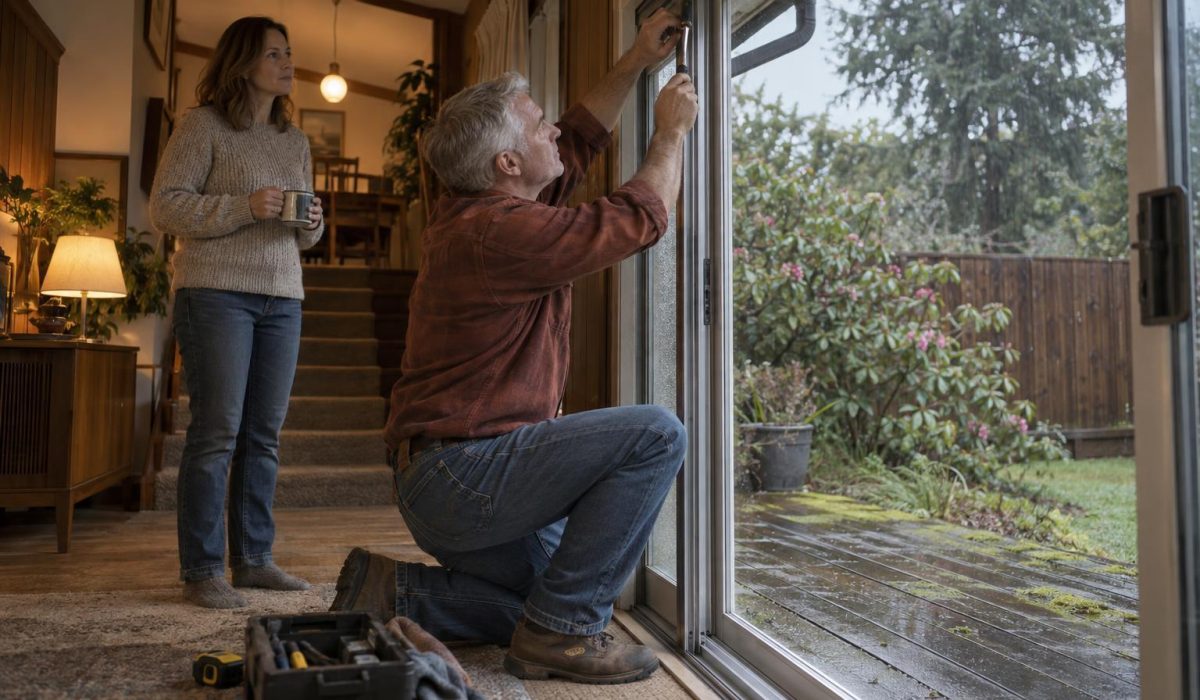
- Clean, correctly adjusted rollers so the door seats fully and the latch engages every time
The roller item is the one people skip and the one that does the most work. Damp Washington County winters swell wood trim and settle frames, and a slider that has dropped out of adjustment will not fully seat, so even a good secondary lock is engaging a door that is already sitting crooked.
Security film on the fixed glass panel is a reasonable fourth step for ground floor doors that are not visible from the street, though it should be installed as a delay measure rather than treated as a barrier.
Replacing a deadbolt that is older than the carpet
Residential deadbolts are graded by ANSI and BHMA on a scale where Grade 1 is the highest and Grade 3 the lowest. A large number of the deadbolts still in service on homes built in this era are Grade 3 builder hardware, and the difference shows up in the bolt itself, the hardened components and the cycle testing behind the rating.
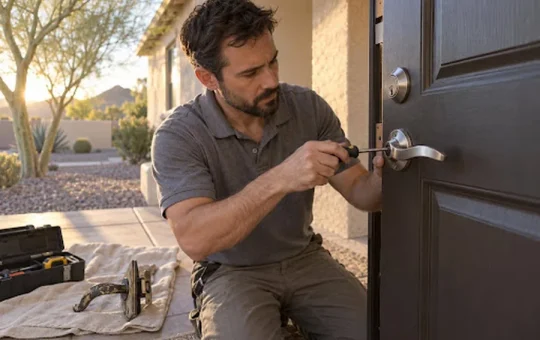
For an exterior door, Grade 2 is the sensible minimum and Grade 1 is not an extravagance. Check three things on whatever you choose: a bolt that throws a full inch, a hardened insert inside that bolt, and a solid cylinder housing rather than a thin decorative collar.
While the old hardware is off, look at the door edge. Multiple layers of paint on a swollen door often mean the bolt has not been throwing fully for years, which quietly turns a good lock into a latch. A locksmith in Hillsboro, OR handling this work will usually plane and realign the bore and strike as part of the job rather than fitting new hardware to an old misalignment.
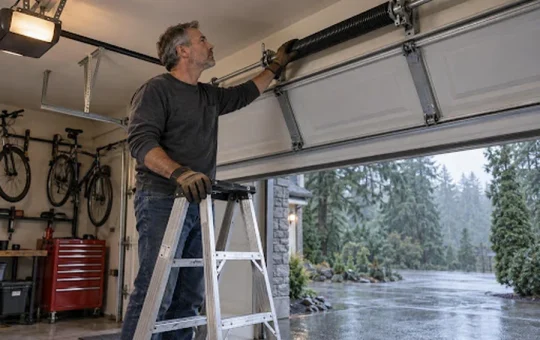
One more door belongs on the list and is almost always forgotten: the door between an attached garage and the house. It is an exterior door in every practical sense and it frequently carries the weakest hardware on the property.
Reinforcing the part that actually fails
This is the highest value item on the whole list, and it costs very little. A deadbolt almost never fails at the lock. It fails at the frame, where a short screw holds a thin strike plate into a strip of soft jamb trim.
The upgrade is a heavy box strike fastened with three inch screws that pass through the jamb and bite into the structural stud behind it. That single change moves the force from a quarter inch of pine to the framing of the house.
Two companion items finish the door. Add the same long screws to the top hinge, which is the other common failure point. And on any outswing door, where the hinge barrels face outside, fit non-removable pins or security studs so the door cannot be lifted off its hinges.
Do this on every exterior door, not just the front. Back doors and side doors in these neighborhoods tend to be less visible from the street, which makes them the more attractive target and the weaker installation.
Adding smart access without adding fragility
Keypad and connected locks have improved a great deal, and the case for them in a household with a dog walker, a teenager and a rotating set of deliveries is easy to make. The evolution of that hardware, and what the newer standards actually change, is laid out in this overview of how modern lock technology is reshaping security.
Two regional cautions are worth respecting. First, batteries. Eight months of damp air and cold nights shorten battery life, so put a recurring calendar reminder on the changeout rather than waiting for the low warning on a January evening. Second, exposure. A keypad on a covered porch will outlast the same unit on an open landing facing the weather by years.
Keep the mechanical layer intact underneath. A keypad deadbolt with an override cylinder, a solid strike and long screws is a genuine upgrade. The same lock fitted to a soft jamb is a nicer interface on the same old weakness. Technicians at Locksmith Near You and other established local shops will normally key those override cylinders to match the rest of the house, which keeps one emergency key working on every door.
Questions homeowners ask
Which single upgrade matters most?
The reinforced strike plate with long screws, because it addresses where doors actually give way.
Do I need to replace my slider?
Usually not, since adjusted rollers plus a secondary bolt handle most of the weakness.
Are smart locks less secure than keyed ones?
Not inherently, as the mechanical installation underneath still determines most of the real world strength.