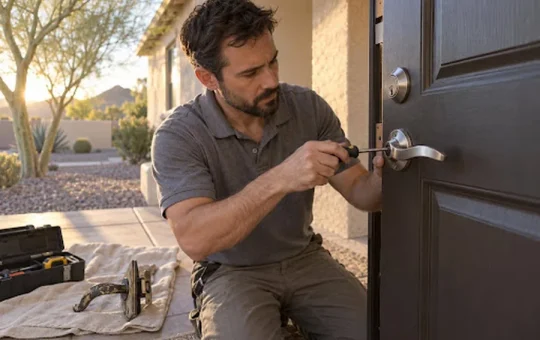

A dental office near Eastern Avenue had eleven doors and nineteen keys floating around the staff room. Nobody could say with confidence who held what. When a part-time hygienist moved out of state without returning her set, the owner had two choices: hope, or pay to rekey the entire suite on a Saturday morning.
That is usually the moment a small business discovers master keying. Done properly, it turns a drawer of unlabeled brass into one short documented list, and it turns a resignation into a ten minute task instead of a weekend project.
Start with doors, not with people
The instinct is to start with staff. The owner gets everything, the manager gets most of it, the front desk gets the lobby. Systems built that way break the first time somebody changes roles or a new position appears.
Doors are the stable part. Walk the space with a notepad and write one line per opening: front entrance, rear delivery door, server closet, records room, mechanical room, break room, cash cabinet. Note the lock type on each, and note whether the door is fire rated, because a rated opening limits the hardware you are allowed to hang on it.
Only after that list exists should you group the openings. A commercial locksmith in Las Vegas can walk the same list with you and say in a single visit whether your existing cylinders can be converted or whether the hierarchy needs new hardware.
Draw the hierarchy on a single page
A master key system is a tree. At the top sits one key that opens everything. Below it sit master keys that cover a department, a floor or a function. At the bottom sit change keys, the ordinary ones handed to individual staff, each opening only its own door.
Small businesses almost never need four levels. Two is usually right: one master for the owner and a trusted manager, change keys for everything else. Every extra level puts more pin combinations into play, and past a point it quietly makes the system easier to defeat rather than harder.
Sketch the tree on one sheet of paper. If it does not fit on that sheet, the plan is more complicated than the business needs.
One decision belongs at this stage rather than later: whether to use a restricted keyway. Restricted blanks are not sold at hardware counters and can only be duplicated by the shop holding your key records, which closes the most common leak in a small business, the employee who quietly made a copy at a mall kiosk. It costs more per key, and for a records room or a cash office it is usually worth the difference.
Write the keying schedule before anyone cuts metal
The keying schedule is the document that outlives your staff turnover. It is not a list of who currently holds keys. It is the map of what each key is permitted to open, plus the cutting detail that makes it work, and you should keep a copy somewhere other than the office.
A usable schedule includes:
- An opening number and a plain English name for every door
- The lock function on each opening: entry, storeroom, classroom or passage
- Which master, if any, that opening answers to
- How many change keys were cut and on what date
- A blank column for the date each key comes back
Ask for keys stamped with the opening number rather than an employee name. People move on, doors do not, and stamped keys turn an audit into a ten minute count.
What the valley adds to the plan
Hardware in Las Vegas lives a hard life. Summer sun on a west facing aluminum storefront moves the frame enough that a latch which worked fine in March starts dragging in July, and staff respond by shouldering the door until something inside the lock gives up. Aligning the strike before the season turns is cheaper than replacing the cylinder after it.
Construction dust is the second local factor. In the newer business parks out toward the 215 the grit is constant, and it works its way into any cylinder sitting in an exterior door. One clean and lubricate a year on exterior openings prevents most of the sticky-key calls that later get blamed on the lock itself.
Clark County treats locksmithing as a licensed trade, so ask for the license number before anyone touches your hardware and file it alongside the schedule.
Whoever does the work should also be willing to put the hierarchy in writing before quoting it. Shops such as Key Boss Locksmith Las Vegas that handle commercial keying regularly will expect that request, and a provider who resists documenting the plan is telling you something useful about how the follow up service will go.
Three questions owners ask before committing
Can my existing locks be master keyed?
Often yes, if they are a common commercial cylinder in reasonable condition, though the honest answer comes from pulling one and inspecting it rather than from a phone estimate.
What happens if a master goes missing?
You rekey every opening that key touched, which is exactly why fewer levels and fewer masters is the safer design for a small office.
How long does a small system take?
A suite of ten to fifteen doors is usually one working day of on-site work, with the planning conversation happening earlier in the week.