By late July, the front door handle on a west facing Las Vegas home can be too hot to hold for more than a second. That same heat is working on everything behind the handle: the springs in the latch, the grease in the cylinder, the finish on the trim and the door itself.
Most lock trouble in the valley does not arrive as a sudden failure. It creeps in over two or three summers as a key that needs jiggling, a latch that sticks, or a deadbolt that only turns when you pull the door toward you. Knowing which symptom points to which cause saves a lot of guesswork, and a lot of money spent on the wrong fix.
What heat actually does to a lock
A lock is a stack of small parts machined to fit closely. Brass cylinders, steel springs and zinc alloy housings all expand as they warm, and they do not expand at quite the same rate. A mechanism that turns smoothly on a spring morning can bind on a 115 degree afternoon.
Lubricant is the second casualty. Oily sprays thin out in high heat and then collect fine desert dust, which turns into a gritty paste inside the keyway. Over time that paste wears the pins and makes every key feel worn, even a brand new copy.
The third problem is the door rather than the lock. Doors and frames move slightly with large swings between afternoon heat and cool nights, and that movement slowly pulls the deadbolt out of line with the strike plate in the frame.
Warning signs, from minor to serious
- The key goes in stiffly or needs a wiggle before it turns
- The lever no longer springs back to level after you let go
- The deadbolt turns easily with the door open but drags when it is closed
- The latch only catches if you push or slam the door
- The exterior finish is peeling, chalky or pitted
- A key has started to bend or shows bright worn spots
The first two are maintenance issues. The middle two are alignment issues. The last two usually mean the hardware itself is near the end of its useful life.
Quick fixes you can do this weekend
Start with cleaning rather than more oil. A puff of dry graphite or a dry PTFE lubricant into the keyway, followed by inserting and turning the key ten or so times, clears most stiffness without attracting dust the way oily sprays do. Wipe the key afterward so the residue does not travel to your pocket.
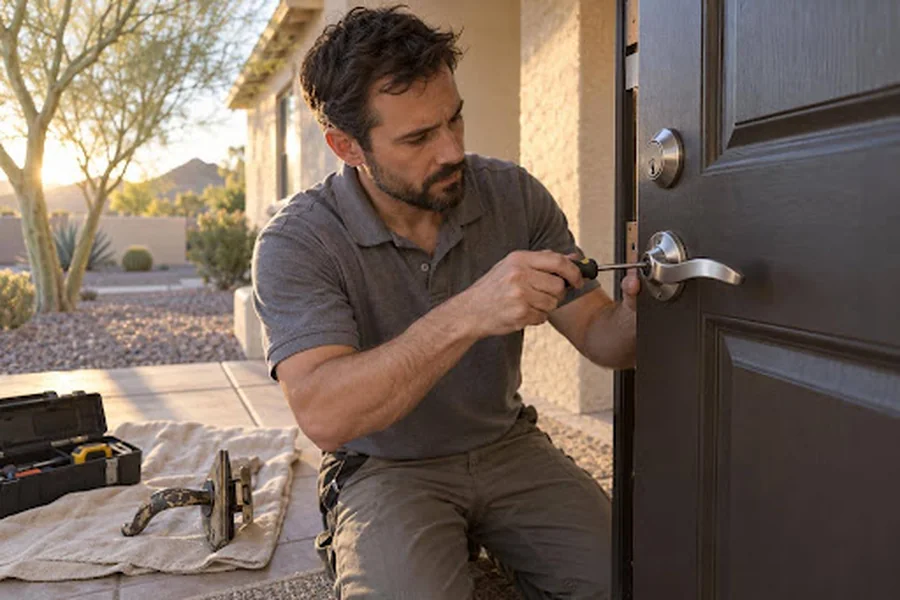
For a deadbolt that drags, close the door and look closely at the strike plate. Scuff marks above or below the hole show which way the door has moved. Tightening the top hinge screws often lifts a sagging door back into line, and a screw that spins without biting can be swapped for a longer one that reaches the framing.
A lever that droops has usually lost tension in its return spring. Some lever sets let you replace the spring cartridge, while on inexpensive builder grade sets the spring is part of the housing and the whole lever has to go.
When the whole set should be replaced
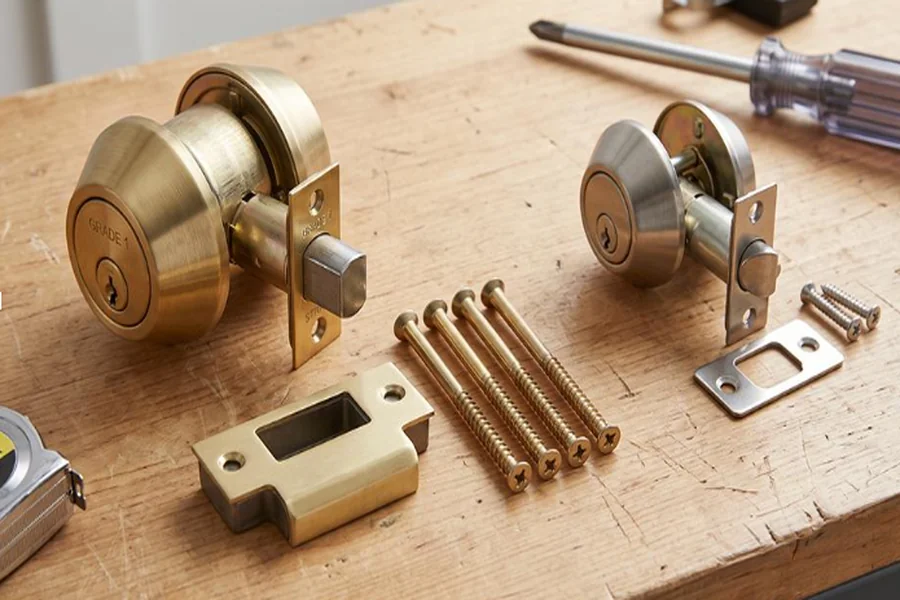
Repairs stop making sense when new keys stick as badly as old ones, when the latch housing is cracked, or when the exterior finish has failed and corrosion has reached the moving parts. At that point a residential locksmith in Las Vegas can replace the handle set and deadbolt together and key them alike, so one key opens both and the new hardware goes in square to the frame from the start.
When you choose new hardware, check the ANSI/BHMA grade on the packaging. Grade 2 is a sensible residential choice and Grade 1 is the commercial standard. For doors in full sun, a finish rated for exterior use, such as a quality powder coat or satin nickel, holds up far better than thin plated brass that blisters after a few summers.
Smart locks deserve a specific note in this climate. Keypads and batteries carry an operating temperature range, and a dark door in direct afternoon sun can run hotter than the air around it. If your front door faces west, read the manufacturer’s rating before buying, and choose a model with a mechanical key override.
A seasonal routine for valley homes
Las Vegas homes take sun, dust and monsoon humidity in a single year, so a small routine goes a long way. Clean and dry lubricate every exterior lock in spring, check strike alignment again in the fall when nights cool down, and replace weatherstripping that has gone brittle. Valley locksmiths such as Magic Hand Locksmith see plenty of late summer calls for exactly these heat related problems, which is a good reason to deal with a sticky lock in April rather than at the end of a scorching August afternoon.
Quick answers
Is a general purpose spray good for locks?
It cleans, but the oily film it leaves attracts dust here, so follow it with a dry lubricant.
Can heat actually lock me out?
A badly misaligned deadbolt can jam, which is why correcting alignment early matters.
Should I rekey or replace?
Rekey when the hardware is sound and you only need new keys; replace when the parts themselves are worn, cracked or corroded.