The house is a 1961 ranch in Mesa Verde with a closed kitchen, two small bathrooms, original aluminum windows and a family of four who like the street too much to leave. They have been collecting ideas for three years. What they do not have is a sequence, and without one a whole-home remodel becomes a series of surprises with a dumpster in the driveway.
Sequence is the difference between a project that lasts seven months and one that lasts fourteen. It decides whether the family can stay in the house, whether the kitchen is usable while the bathrooms are torn up, and whether the plumber comes once or three times. It also decides how the project is bought, because the choice between a design-build firm and separate bids shapes everything that follows.
Design-build or separate bids? The trade-off in plain terms
With separate bids, you hire an architect or designer to produce drawings, then send those drawings to several contractors and pick one. The advantage is competition on price and a designer who answers only to you. The cost is time, since the drawings are finished before anyone prices them, and a familiar failure: a design that comes in well over budget and has to be redrawn.
With design-build, one firm carries design and construction under a single contract. Pricing happens alongside drawing, so the budget shapes the plan from the first sketch, and there is one party responsible when a detail on paper does not match a wall in the house. The trade-off is less price competition at the end, which is why the firm’s reputation and transparency on costs matter more.
For a whole-home project with many interlocking decisions, the integrated approach tends to protect the schedule. Firms such as Primework Construction that run design-build on the coast build the phasing plan into the design phase, so the order of work is settled before demolition rather than negotiated during it.
The phasing order that keeps a house livable
Whichever way you buy it, the physical sequence should follow the building, not the wish list:
- Phase one: structure, roof, windows and anything that opens the exterior envelope
- Phase two: rough plumbing, electrical and HVAC for the entire house, done once
- Phase three: the kitchen, since it is the room the family cannot do without for long
- Phase four: bathrooms, one at a time, so one always works
- Phase five: flooring, paint, trim and fixtures, done last so nothing gets damaged
The logic is simple. Everything hidden happens before anything visible, and the rooms that keep the household functioning are finished before the ones that merely improve it. Doing the rough trades once for the whole house is where the real savings hide; opening the same walls twice is the most common way a phased remodel costs more than a single push.
Living in the house while it happens
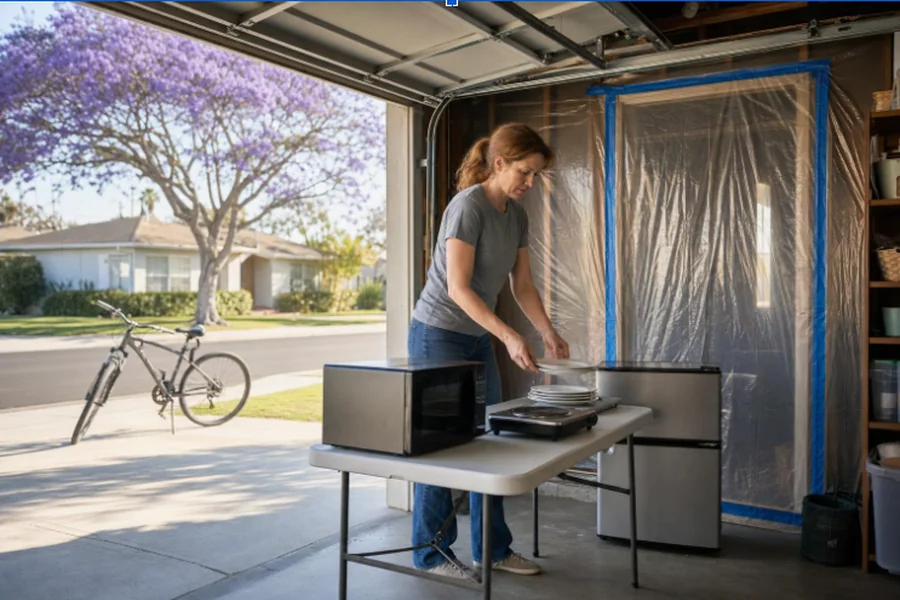
Staying put is possible for most whole-home remodels if the plan is designed for it. Set up a temporary kitchen in the garage or dining room with a microwave, a hot plate, a small refrigerator and a utility sink. Seal the work zone with floor-to-ceiling plastic and zippered doors, and ask that the return-air grilles in the work area be covered so dust does not travel through the ducts.
Agree on hours, and know the city’s own construction-hour limits so you can hold the crew to them. Plan for the loud days, which are demolition, concrete cutting and framing, by being elsewhere. Decide in advance what would send you to a rental: no working bathroom for more than two days, no water for more than one, or a second story coming off the house. Having the threshold written down keeps the decision calm when it arrives.
A seasoned home remodeling contractor in Costa Mesa will build these arrangements into the schedule, including which bathroom stays live in each phase and where the family’s belongings go during the flooring phase. Ask about it in the first meeting; the answer tells you a great deal about how the firm runs a job.
Costa Mesa specifics: 1950s tracts, coastal air and the city counter
Most of the city’s houses date from the 1950s and 1960s, built quickly on slab foundations with galvanized water lines, undersized electrical panels and low-pitched roofs. A whole-home remodel is the moment to replace the plumbing, upgrade the panel to handle induction and a heat pump, and add insulation the original builder skipped. Eastside and Mesa Verde lots are generous by coastal standards, which often makes an addition simpler than in the older beach cities next door.
The marine layer brings salt and moisture a couple of miles inland, so exterior hardware, window flashing and any steel in the structure need to be specified for corrosion rather than copied from an inland plan. Permits run through the city, and a project that touches structure and all the trades will go through plan review; build that into the timeline rather than hoping for an over-the-counter approval.
Some families run the numbers and find that a remodel of this scale approaches the cost of a different house. That is a legitimate comparison, and one worth making honestly; a thoughtful look at whether to remodel or move lays out the questions that matter, from school boundaries to the value of a lot you already own.
Questions that come up
How long does a whole-home remodel take in practice? Seven to twelve months of construction for a typical three-bedroom, after two to four months of design and permits.
Should we move out? Not necessarily; a well-phased job keeps one bathroom and a temporary kitchen working, but a second-story addition or a full re-pipe is usually the point to relocate for a few weeks.
Does phasing over two years save money? Rarely, because the rough trades and permits get paid for twice; phasing saves cash flow, not total cost.